


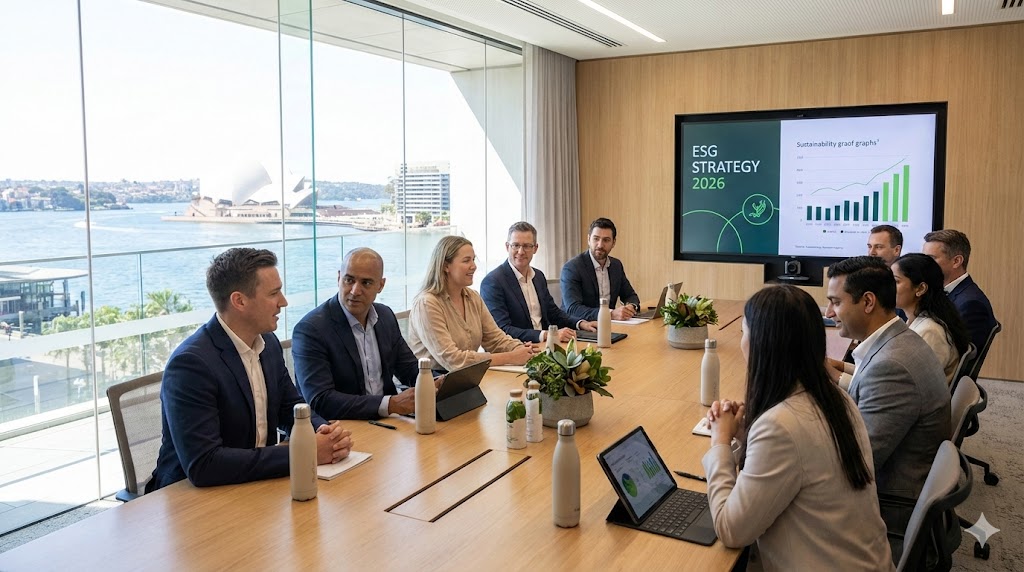
The Corporate Case for ESG-Aligned Events in 2026
In 2026, corporate ESG events in Sydney are a core part of how leadership shows up. Boards, procurement teams and stakeholders are paying closer attention to what your events say about your organisation, from emissions and waste to supplier choices and accessibility.
Sustainable business events are a smart, measurable part of your corporate event strategy. Supporting reputation, risk management, and the credibility of your wider sustainability commitments.
Here’s the good news: doing this well doesn’t need to be complicated (or expensive). The best carbon-neutral corporate conferences don’t feel like a lecture. They feel like a well-run event, just with smarter decisions behind the scenes: venues that make sense, thoughtful catering, streamlined materials, and a clear plan to measure and reduce impact.
At On Purpose Events, we’re a profit-for-purpose agency helping organisations deliver sustainable corporate conferences that satisfy boardroom expectations and real-world outcomes. When it comes to ESG event compliance in Sydney, our approach is simple: make responsible choices easy, credible, and seamless. Built in, not bolted on.
Why Sustainable Events Matter to Your Board
Sydney is one of Australia’s busiest corporate event markets and that means your event programme is increasingly visible to the people who matter most: investors, boards, executives, regulators and talent. Done well, sustainable business events move from “operational detail” to a genuine lever in governance, risk and reputation.
Here’s why it belongs on the board agenda:
- Investor scrutiny is real (and measurable). Major institutional investors increasingly assess ESG factors as part of decision-making, including climate risk and the credibility of sustainability claims. Recent research with institutional investors found more than three-quarters consider ESG (among other factors) in their investment decisions.
- Reporting obligations are tightening in Australia. From 1 January 2025, many large Australian businesses and financial institutions are required to prepare annual sustainability reports containing mandatory climate-related financial disclosures, with a phased rollout across reporting groups. For many organisations, event emissions can shift from “nice-to-track” to “important to evidence”, especially when stakeholders want to see how strategy translates into operational choices.
- Brand differentiation (without the theatre). In competitive markets, credible sustainability leadership strengthens positioning. The key word is credible: avoid vague claims, show clear decisions, and back outcomes with data.
- Risk mitigation. Proactive sustainability reduces exposure to reputational risk, supplier disruption, and stakeholder pushback, particularly when climate and disclosure expectations are rising.
- Talent attraction and leadership confidence. High-performing executives and emerging leaders want to work with organisations whose actions match their values. Events are one of the most public, culture-defining moments a company creates.
For ASX-listed companies and large private enterprises, carbon-neutral corporate conferences can signal board-level intent, but the real value comes from doing it in a way that’s practical: measurable reductions first, smart supplier choices, and reporting that stands up to scrutiny.
A Strategic Framework for Carbon-Neutral Corporate Events
For corporate event managers reporting into CFOs and sustainability leads, “carbon-neutral” only holds weight when it’s built on three things: accurate measurement, real reductions, and credible offsetting, aligned with the same discipline your organisation applies to emissions reporting.
1) Comprehensive measurement
Start by calculating an event footprint using an approach consistent with Scope 3 thinking, because that’s where most event emissions usually sit. Include:
- venue energy and operations
- attendee travel (air, rail, rideshare, transfers)
- accommodation
- catering and beverages
- waste and recovery streams
- materials and signage production
- freight, bump-in/bump-out and logistics
This creates the baseline you can report on, compare year-on-year, and use to guide procurement decisions.
2) Strategic reduction
Next, reduce emissions where it makes the biggest difference, and where you’ll feel the benefit beyond carbon:
- Less waste = lower costs (and fewer “why did we print that?” moments)
- Smarter catering = better experience (seasonal, considered menus that still feel premium)
- Accessible venues + thoughtful scheduling = happier attendees (and often lower travel impact)
The strongest corporate event strategy is the one that improves outcomes and reduces impact, without making your team’s workload explode.
3) Verified offsetting (after reductions)
Finally, offset the unavoidable remainder using recognised standards and audit-ready documentation. Two of the most commonly referenced standards are Gold Standard and Verra’s Verified Carbon Standard (VCS). What matters most: the credits are transparently issued and retired in a way your organisation can evidence in ESG reporting.
At On Purpose Events, we use Sustain.Life as part of sustain.life (workiva carbon) to support carbon accounting with the level of structure corporate reporting demands, while keeping the process practical for event teams.
Venue Selection: Your Single Largest Impact Decision
If you’re aiming for carbon-neutral corporate conferences and credible corporate ESG events in Sydney, venue selection is the decision that moves the needle fastest. It affects emissions, attendee experience, brand perception and, importantly, whether you can actually prove outcomes in ESG reporting.
Sydney venues are stepping up, but not all “sustainable” claims are equal. Here’s what procurement and governance teams should look for.
What to assess when choosing a corporate venue in Sydney:
- Third-party certifications (proof, not promises). Look for independent ratings and standards that stand up to scrutiny such as Green Star (including 6 Star “world leadership” ratings), NABERS Energy ratings, and event sustainability management standards like ISO 20121.
- Energy infrastructure and renewable sourcing. Ask how the venue sources power (renewable electricity contracts, on-site solar, or verified procurement mechanisms). These choices can materially improve the footprint of sustainable business events and help support the story you tell in sustainability reporting.
- Reporting capability (data you can actually use). Strong venues can provide event-relevant environmental data across energy use, water, and waste outcomes, so you can quantify impact and support your organisation’s broader reporting disciplines.
- Supply chain transparency. Look for documented procurement policies and supplier standards (catering, waste partners, materials). This supports wider supply chain sustainability objectives and reduces reputational risk.
At On Purpose Events, our venue finding service weighs sustainability credentials alongside capacity, location, accessibility and budget, so you’re not choosing between responsible delivery and practical requirements.
Corporate Catering: Sustainability Meets Executive Expectations
Food and beverage is one of the most visible parts of any executive event, and one of the easiest places to make measurable progress without compromising the experience. The aim isn’t “less”; it’s better: premium, intentional catering that supports your sustainable business events goals and holds up under stakeholder scrutiny.
- Strategic sourcing: Choose catering partners who can show documented sustainable sourcing policies, traceable proteins, and transparency that aligns with corporate procurement standards.
- Plant-forward menu design: A plant-forward approach is one of the most effective ways to reduce catering emissions. Evidence consistently shows plant-based patterns can materially reduce food-related greenhouse gas emissions (with some analyses estimating reductions up to ~70% for vegan dietary patterns compared to typical diets).
- Waste reduction through precision: Food waste is an ROI leak. Strong catering teams reduce it through accurate forecasting (RSVP discipline + real attendance patterns) and tighter back-of-house controls. One study modelling catering demand forecasting found potential waste reductions in the range of ~14% to 52%.
- Social impact integration: Partnerships with food-rescue organisations like OzHarvest help divert edible food from landfill and support communities in need—turning surplus into a tangible CSR outcome.
Reducing Materials and Embracing Circular Principles
The old “take–make–dispose” approach doesn’t hold up anymore. Circular principles are becoming the smarter default for sustainable business events in Sydney: design materials and experiences so they can be reused, recovered, or composted.
- Digital-first communications: Swap printed programmes for QR-based agendas, event apps, and interactive screens. Done well, digital doesn’t feel like “cutting back”, it feels modern, efficient, and more accessible.
- Reusable event elements: Invest in modular signage systems, re-skinnable backdrops, and flexible décor pieces. This reduces waste and recurring procurement costs.
- Thoughtful branded items: If you’re giving something away, make it something people actually want to keep—durable drink bottles, locally made goods, or native seed packs. The rule of thumb: fewer items, higher quality, clear purpose.
- Clear waste separation: A circular plan only works if it’s easy on the ground. Use well-marked waste stations, consistent bin types, and simple signage (pictures + plain language beats paragraphs).
Sustainable Transport Solutions
For most corporate events, transport is the biggest piece of the emissions puzzle. You can’t control every decision, but you can design the event so lower-impact options are the easiest, most appealing default.
- Venue location matters: Choose venues that are genuinely easy to reach by train, light rail, bus and on foot. Our Sydney event management approach includes shortlisting venues that balance accessibility and sustainability.
- Make Sustainable transport the obvious choice: Don’t just mention public transport, design it into the experience. Include directions in calendar invites, add walking times from key stations, and use simple “best option” callouts.
- Efficient group transport: Consolidate transfers into group shuttles and plan fewer, smarter movements (one precinct beats three locations).
- Hybrid attendance options: Hybrid events are a strategic lever. Offering remote options for selected sessions reduces transport emissions while widening participation.
Technology as a Sustainability Enabler
Used well, event tech does more than replace paper. It helps you deliver sustainable business events with better flow and measurable outcomes.
- Comprehensive event apps: Replace printed maps with apps featuring personalised schedules, real-time updates, and networking tools.
- Digital credentials: Digital tickets and QR-based check-in reduce printed badges and speed up arrival.
- Smart resource management: Use data to right-size catering, room allocations, and session planning, resulting in fewer wasted resources.
- Sustainability analytics: This is where tech supports ESG event compliance: consolidating data for carbon accounting across energy, waste, and travel.
Building a Sustainability-Aligned Supplier Network
A genuinely sustainable event is only as strong as the suppliers behind it. Your venues, caterers, AV teams, and logistics partners shape the footprint.
- Make sustainability part of procurement: Build it into selection criteria. Ask suppliers for environmental policies, certifications, and waste practices upfront.
- Prioritise local suppliers: Favour Sydney/NSW suppliers to reduce transport emissions and simplify logistics.
- Be clear about expectations: Share requirements early regarding packaging, bump-in/out constraints, and material standards.
- Build long-term partnerships: Working with aligned partners over time leads to consistent delivery standards and continuous improvement year-on-year.
Engaging Attendees in Your Sustainability Story
Sustainability shouldn’t be hidden in the operations plan. When it’s shared with intention, it becomes part of the experience, strengthening trust and enhancing brand perception.
- Be transparent: Use light-touch signage to explain key choices (venue, catering, waste) and share outcomes post-event. People respond well when they can see where the effort went.
- Create interactive moments: Use simple prompts like footprint polls or pledge walls to make engagement optional and interesting.
- Educate without preaching: Lead with benefits (e.g., “Fastest way to arrive is train + 6 min walk”) rather than guilt.
- Celebrate outcomes: Share measurable results like emissions reduced or waste diverted. This turns sustainability from a value statement into evidence.
Measuring and Reporting Sustainability Impact
What gets measured gets managed. Comprehensive reporting creates accountability and makes business value visible.
- Establish baselines: Capture a clear “current state” across Energy, Transport, Catering, Waste, and Water to make progress real.
- Set clear goals: Define targets like waste diversion rates or carbon footprint caps that are ambitious but practical.
- Track progress: Monitor metrics through planning, delivery, and wrap-up phases.
- Report transparently: Share honest outcomes with stakeholders—what you aimed to do, what you achieved, and what you’ll improve next time. Credibility beats perfection.
Quantifying Corporate Value: The ESG Event Business Case
For CFOs and exec teams, sustainability only earns its place when it shows up in the numbers. A well-run carbon-neutral event programme is a sharper way to deliver your corporate event strategy.
- Direct cost optimisation: Sustainable choices often remove waste from the budget. Industry guidance notes that sustainable practices can reduce costs, with some references citing ~20–30% reductions.
- Brand equity enhancement: Sustainability has become a proxy for trust. Credible claims influence purchasing behaviour and brand growth.
- Regulatory preparedness: Building measurement discipline now strengthens audit readiness for future reporting requirements.
- Talent value proposition: 41% of senior executives say they factor an employer’s ESG reputation into job decisions. Events are where values become real.
- Risk mitigation: A repeatable sustainability approach reduces reputational risk and helps leadership feel confident standing behind the event.
Looking Ahead: Sustainability Trends Beyond 2026
For corporate strategy teams planning multi-year programs, expectations will keep rising. The events that stand out will be the ones designed with systems-thinking from the start.
- Circular economy integration: Moving beyond “less waste” to design where elements are built to be reused, repurposed or recovered.
- Climate-positive ambitions: Going beyond carbon-neutral to high-integrity removal or restoration initiatives, grounded in real reductions first.
- Biodiversity and nature outcomes: Broadening from climate into nature, from native planting to local ecology partnerships.
- Scope 3 integration: Treating event emissions as a normal, trackable part of Scope 3 reporting with consistent data capture.
Making Sustainability Accessible — Starting Now
One of the best things about sustainable event management is that it’s not reserved for big budgets. Meaningful improvements are available to every team.
Begin with simple, high-impact choices:
- Swap bottled water for refill stations
- Choose venues accessible by public transport
- Offer premium, plant-forward catering
- Go digital-first for agendas and updates
- Prioritise local suppliers
At On Purpose Events, every event can be as light or as deep on sustainability as you want it to be. Whether you’re aiming for smarter procurement or a fully ESG-aligned approach, we’ll guide you through practical steps.
Strategic ESG Leadership Through Corporate Events
Sydney’s corporate events sector is at a turning point. The shift toward sustainable business event planning isn’t just about compliance, it’s about how organisations demonstrate values in public and earn stakeholder trust.
For decision-makers, the question is no longer whether sustainability belongs in your event programme. It’s how to embed it into your corporate event strategy in a way that’s credible, achievable, and aligned with your brand.
The business case is straightforward: well-executed sustainable business events support financial performance, stakeholder engagement, and risk management.
Let’s Create Events That Deliver – On Purpose
Ready to deliver carbon-neutral corporate conferences that satisfy board expectations and still feel effortless for your team?
Talk to On Purpose Events about a sustainability-first approach to your event programmes, designed to meet governance and reporting requirements while driving measurable outcomes.